
ESA Honors Rosamond Naylor
Naylor was honored for “designing ecologically and economically sound practices that protect native species and enhance global food security in marine and terrestrial ecosystems."

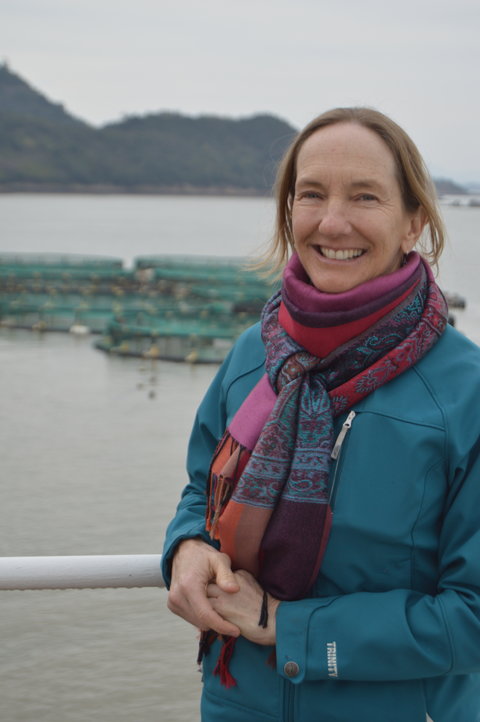
The Ecological Society of America (ESA) has named William Wrigley Professor and FSE Founding Director Rosamond Naylor as one of its 2019 Fellows. The lifetime appointment recognizes Naylor for “designing ecologically and economically sound practices that protect native species and enhance global food security in marine and terrestrial ecosystems,” according to the ESA’s April 4th announcement.
Naylor, a professor with the School of Earth, Energy & Environmental Sciences, also is a senior fellow at the Stanford Woods Institute for the Environment and the Freeman Spogli Institute for International Studies.
ESA fellows are recognized for “outstanding contributions to a wide range of fields served by ESA, including, but not restricted to, those that advance or apply ecological knowledge in academics, government, nonprofit organizations and the broader society” and are elected for life.
“I’m particularly honored because I have been trained formally as an economist, but my most creative and impactful work has been done in collaboration with ecologists," Naylor said. "My colleagues in ecology have inspired me to ask really interesting questions at the interface of global food systems and natural ecosystems, and I have learned a great deal in the process.”
Explore More
-
Christine Su studied sustainable grazing systems in Stanford Earth's E-IPER program. Now 9,000 ranchers use her app, PastureMap, to make better decisions about where to graze cattle.
-
Researchers imagined, designed, and tested an elegant lens device that can efficiently gather light from all angles and concentrate it at a fixed output position. (Source: Stanford Engineering)
-
A new hypothesis reveals that a global sedimentary cycle driven by seasons could explain the formation of landscapes on Saturn’s moon Titan. The research shows the alien world may be more Earth-like than previously thought.


