
Gabrielle Wong-Parodi receives NSF CAREER Award
The assistant professor of Earth system science will explore how communities are impacted by exposure to extreme climate events over time, with a focus on low-income populations that have historically been disadvantaged by climate hazards.

Assistant professor of Earth system science Gabrielle Wong-Parodi recently received a 2021 National Science Foundation (NSF) CAREER Award. The grant supports early-career faculty who have the potential to serve as academic role models in research and education and to lead advances in the mission of their department or organization.
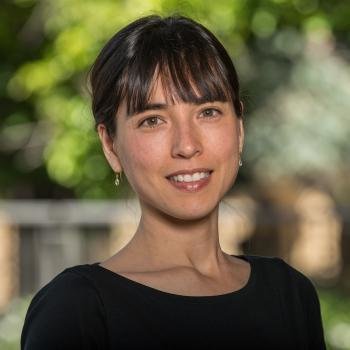
Wong-Parodi leads the Behavioral Decisions and the Environment lab in the School of Earth, Energy & Environmental Sciences (Stanford Earth). The research team employs behavioral decision science approaches to create evidence-based strategies for informed decision making, with a focus on building resilience and promoting sustainability in the face of a changing climate.
Wong-Parodi’s CAREER Award proposal, Understanding the Drivers and Consequences of Personal Adaptation Behavior to Environmental Extremes, aims to explore how communities are impacted by exposure to extreme climate events over time – particularly low-income populations that have historically been disadvantaged by climate hazards. The project aspires to build community resilience, improve adaptation behavior models for environmental extremes, contribute to effective policymaking, and advance training of the next generation of behavioral decision science scholars.
Wong-Parodi and her team will conduct a long-term, randomized, controlled trial to determine whether or not using a smartphone app-based tool can enhance adaptation behaviors and outcomes during exposure to wildfire smoke. The research will be carried out among at least 350 Bay Area residents to determine behaviors such as face mask wearing, sheltering, home or workplace improvements, and adaptation outcomes such as improved health and fire protection.
The NSF CAREER Award grants faculty members five years of financial support to foster innovative developments in science and technology, increase awareness of careers in science and engineering, give recognition to the scientific missions of the participating agencies, enhance connections between fundamental research and national goals, and highlight the importance of science and technology for the Nation’s future.
Wong-Parodi is also a center fellow at the Stanford Woods Institute for the Environment.
Explore More
-
As the globe warms, mosquitoes will roam beyond their current habitats, shifting the burden of diseases like malaria, dengue fever, chikungunya and West Nile virus. Researchers forecast different scenarios depending on the extent of climate change.
-
Researchers at Stanford’s Hopkins Marine Station find that expanded marine protected areas are successful in limiting fishing and increasing reef shark populations.
-
Island geography, genealogy, kinship, and other cultural and environmental factors influenced early Pacific island societies to develop sustainable practices. How can we apply these lessons to climate and sustainability issues today?


