
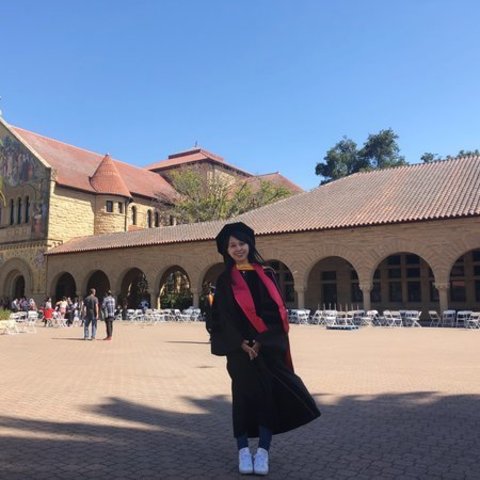
Beibei Wang, Energy Resources Engineering PhD ’19, admits there are some differences between what she studied at Stanford and her current work as a data scientist for LinkedIn.
“For one, the goals are different. At Stanford, I was more focused on discovery or trying to understand how the world works on a fundamental level. At LinkedIn, I’m applying my skills to a purpose – in this case, helping people find their dream jobs.”
Wang sees her role at LinkedIn as a natural progression from her education in the Department of Energy Resources Engineering. “It’s not as different as you think. I use many of the same skills – I code, I build models, I do data analysis, I solve problems.”
Wang is responsible for building models that do two main things: recommend the right candidates to recruiters and recommend relevant jobs to job seekers. Since LinkedIn is predominately focused on professional networking, getting these algorithms right is essential to the functionality of the platform. “It’s rewarding to know that my success at work, which is tracked in the form of confirmed hires, also means people are finding meaningful careers.”
“I’ve always felt that if I feel useful and I’m continually learning, then I know I’m in the right place,” she said.
Explore More
-
While Pacific leaders gather for the 2023 Asia-Pacific Economic Cooperation Summit, Stanford Center for Ocean Solutions researchers discuss solutions to illegal fishing.
-
The energy-centered postdoctoral research program is nurturing a global community of future leaders to realize sustainable, affordable, secure energy for the world.
-
With support from the TomKat Center, two Stanford alumni are working to transform biowaste such as palm fibers into oil feedstocks for advanced fuels.


